
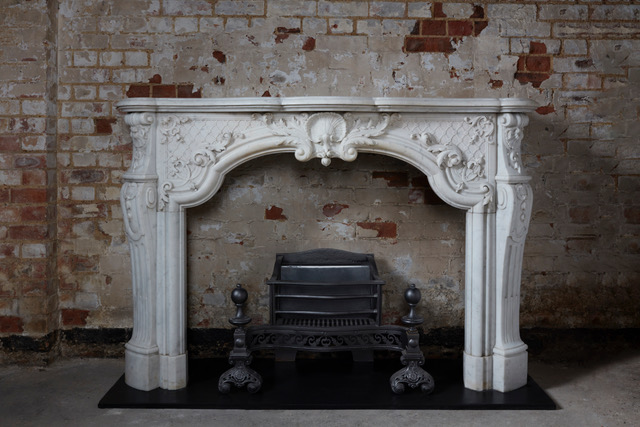
The Anatomy of an Antique Fireplace: A Guide to the Details That Matter
An antique fireplace is more than a beautiful piece of architectural salvage. Look closely and you will find a carefully considered composition of materials, proportions, craftsmanship and decorative details, each telling a story about the period in which it was made.
For anyone choosing an antique fireplace for a period property, understanding these individual elements can make all the difference. From the mantel shelf and frieze to the fireplace opening and cast-iron insert, every part contributes to the character and proportions of the finished chimneypiece.
At Renaissance London, we have spent three decades sourcing, restoring and supplying antique fireplaces from across Britain and Europe. Here, we take a closer look at the anatomy of a traditional fireplace and explain what to look for when choosing an original piece.
1. The Mantel Shelf

The mantel shelf is the horizontal uppermost section of the fireplace and one of the first details you notice.
Its depth, thickness and profile can vary considerably depending on the period and style of the fireplace. A
restrained Georgian mantel shelf, for example, may have relatively simple lines and carefully balanced proportions, while later Victorian examples can feature more elaborate mouldings and decoration.
The mantel shelf also plays an important architectural role. It provides a visual transition between the fireplace and the wall above, and its proportions should feel appropriate to the scale of the room.
When selecting an antique fireplace, it is therefore worth considering not only the decorative detail of the shelf, but also how its width and depth relate to the surrounding architecture.
2. The Frieze
Immediately beneath the mantel shelf is the frieze — the horizontal decorative section that runs across the fireplace.
The frieze can be one of the most revealing parts of a fireplace when identifying its style or period. Depending on the example, it may be completely plain, carved with classical motifs, decorated with panels or tablets, or enriched with more elaborate ornament.

On Georgian fireplaces, classical influences are particularly important, with motifs such as urns, paterae, swags and other restrained architectural details frequently appearing.
On later fireplaces, decoration can become considerably more elaborate, reflecting changing tastes and the influence of movements such as Gothic Revival, Aestheticism and Art Nouveau.
The frieze is therefore not simply decoration — it is one of the details that gives an antique fireplace its identity.
3. The Jambs and Legs
The vertical sections supporting the mantel shelf are commonly referred to as the jambs, while the lower sections are often described as the legs. It’s fine to use these interchangeably though. Some pieces have clearly defined top block and/or foot blocks too.
These elements provide the fireplace with its sense of structure and are particularly important to its overall proportions.
Look carefully at their shape and detailing. Some antique fireplaces have simple, square jambs, while others feature columns, pilasters, carved panels, reeded detailing or shaped mouldings.
The relationship between the jambs and the fireplace opening is also crucial. A well-proportioned antique fireplace should feel balanced from top to bottom, rather than appearing as a collection of individual decorative components.
4. The Fireplace Opening
At the centre of the chimneypiece is the fireplace opening — the space around which the surround is constructed.
Openings can vary in shape, from simple rectangular forms to more distinctive arched or shaped designs. The profile of the opening can have a surprisingly significant effect on the character of the fireplace.
A generous opening surrounded by substantial marble can create a very different impression from a smaller opening framed by delicate Georgian mouldings.
It is also important to consider the practical dimensions of the opening when sourcing an antique fireplace. The dimensions of the chimney opening, hearth and intended insert all need to be considered before installation.
5. The Inner Moulding
One of the finer details to examine is the moulding immediately surrounding the fireplace opening.
This can range from a simple bevel or bead to a more substantial bolection or moulded profile. Such details may appear subtle at first, but they can dramatically change the way light catches the fireplace and give the surround much of its visual depth.
On a good antique fireplace, these details are usually carefully proportioned to the rest of the piece.
6. The Material
The material from which a fireplace is made is another defining characteristic.
Marble is particularly associated with many fine Georgian, Regency and Victorian fireplaces, with different varieties offering their own colour, veining and character. Carrara marble, statuary marble and richly veined decorative marbles can all produce very different results.
Stone fireplaces offer another aesthetic altogether, often bringing a softer, more architectural quality to an interior. Limestone, for example, can work beautifully in both historic and contemporary settings.
Cast iron is particularly associated with fireplace inserts and surrounds, especially in Victorian and later interiors.
One of the attractions of an antique fireplace is that natural materials carry the marks of time. Subtle variations in colour, veining, patina and surface texture are part of what makes an original piece unique.
https://www.renaissancelondon.com/marble-fireplaces/
7. The Fireplace Insert
Inside the surround sits the fireplace insert — an element that can easily be overlooked when attention is focused on the marble or stone surround.
Period cast-iron inserts were designed as architectural features in their own right. They can feature intricate mouldings, geometric patterns, floral decoration, tiles and other details appropriate to their period.
Choosing an insert that is appropriate to the surround can make an enormous difference to the finished fireplace. A beautiful antique surround paired with an inappropriate insert can feel visually disconnected, whereas the right combination can make the entire composition appear original and complete.
We need to do another post (here’s one from a bit further back: https://www.renaissancelondon.com/period-cast-iron-inserts-the-perfect-finishing-touch-for-a-period-home/) about different insert types.
https://www.renaissancelondon.com/cast-iron-fireplaces/
8. The Grate
The grate, sometimes referred to as the basket, sits within the fireplace opening and forms part of the functional and decorative centre of the fireplace. grates vary considerably in design. Some are simple and understated, while others incorporate elaborate scrollwork, brass detailing or decorative motifs.
As with the insert, the grate should be considered in relation to the period and style of the surround.
9. The Hearth
The hearth is the horizontal surface immediately in front of the fireplace and an important part of the overall composition.
It can be made from materials including stone, slate, tiled, or marble and may be simple or highly decorative. It can also offer a contrast, match the fireplace or pick up another colour in the room.
The hearth should not be treated as an afterthought. Its colour, material and proportions can help visually anchor the fireplace within the room, while its dimensions also need to work with the requirements of the installation.
10. Proportion: The Detail That Brings Everything Together
Perhaps the most important element of any fireplace cannot be isolated as a single component: proportion.
A fireplace can contain beautiful marble, intricate carving and an impressive insert, but if the individual elements are not correctly balanced, the result can feel wrong.
This is one reason antique fireplaces are so appealing. The best examples have an inherent sense of proportion developed through the original design and craftsmanship.
The width of the mantel shelf, the height of the surround, the size of the opening, the depth of the mouldings and the scale of the decoration all work together.
For an interior designer, architect or homeowner, understanding these relationships is often more useful than simply choosing a fireplace based on its decorative style.
How to Read an Antique Fireplace
When examining an antique fireplace, take a moment to look beyond the overall impression.
Ask yourself:
- What period does the design suggest?
- How are the jambs and legs shaped?
- What decoration appears on the frieze?
- What is the profile around the opening?
- What material has been used?
- Is the insert original or a later addition?
- Does the fireplace have a natural aged patina?
- Are the proportions appropriate for the room in which it will be installed?
These details can help reveal the history of a fireplace and, importantly, help you understand whether a particular example will work within your own interior.
Original Character and Restoration
Antique fireplaces inevitably show evidence of their history. Small variations in colour, old repairs, gentle wear and changes in surface texture can all contribute to their character.
Restoration is therefore about finding the right balance. The objective is not necessarily to make an antique fireplace look new, but to preserve its character while ensuring that it is suitable for its next setting.
At Renaissance London, our experience in restoration allows us to assess individual fireplaces and understand what is required to bring them back to their best while retaining the qualities that make them special.
Choosing the Right Antique Fireplace
The right fireplace should feel as though it belongs to the architecture around it.
For a Georgian property, that may mean looking for restrained classical proportions and elegant marble detailing. A Victorian interior might call for a more decorative cast-iron insert or a richly ornamented surround. In a contemporary home, an antique fireplace can provide contrast, introducing texture, craftsmanship and history into an otherwise modern space.
https://www.renaissancelondon.com/bespoke-georgian-fireplaces-for-a-listed-building-project/
Ultimately, choosing an antique fireplace is about more than finding a beautiful object. It is about understanding the architecture, appreciating the craftsmanship and finding the right relationship between the fireplace and the room.
At Renaissance London, our collection of antique, reclaimed and bespoke fireplaces encompasses a wide range of periods, materials and styles. Whether you are restoring a period property or looking for a distinctive architectural centrepiece for a contemporary interior, understanding the anatomy of a fireplace is the first step towards finding the right one.
