
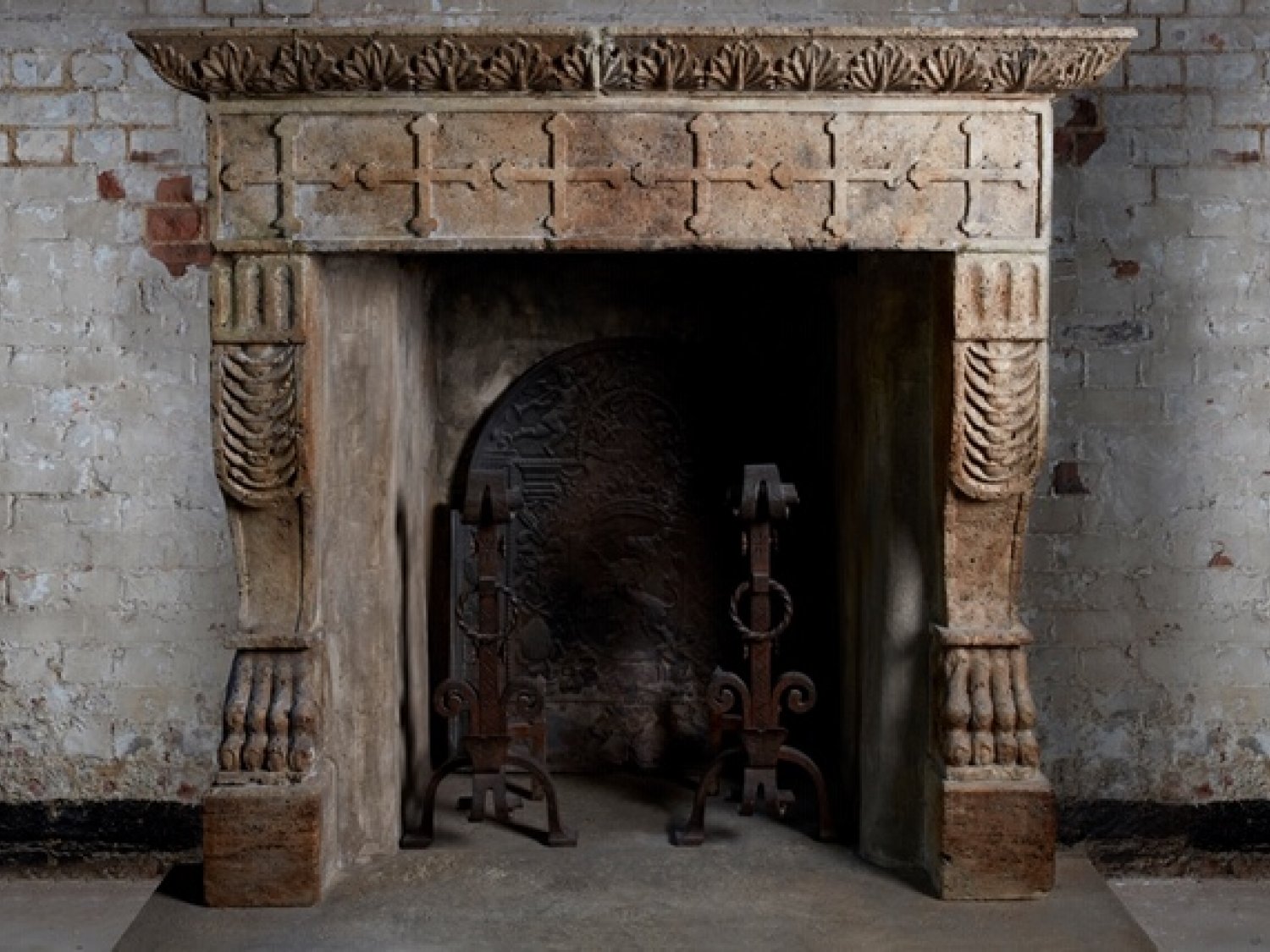
The History of the Fireplace: From Tudor Inglenooks to Georgian Marble
Few features have played such an enduring role in British architecture as the fireplace. For centuries, it was quite literally the heart of the home: a source of warmth, a place for cooking and gathering, and an architectural focal point around which rooms were designed.
As tastes, technology and architecture changed, so did the fireplace. The great inglenooks of Tudor houses gave way to increasingly refined classical surrounds; the restrained elegance of the Georgian period was followed by the decorative exuberance of the Victorian era.
Today, an antique fireplace offers more than a practical feature. It can provide a direct connection to the history and architecture of a building, bringing proportion, craftsmanship and patina that are difficult to reproduce.
Tudor fireplaces: built for warmth and gathering
In medieval and Tudor houses, fireplaces were generally substantial structures designed around the practical demands of heating and cooking.
Large open fireplaces and inglenooks could dominate a room, particularly in the great halls of larger houses. Their generous proportions allowed substantial fires to burn, while the surrounding masonry or stonework was often robust and relatively simple in decoration.
As domestic architecture developed, fireplaces became increasingly integrated into individual rooms rather than serving a single large communal space. Chimneys became more widespread, allowing houses to have multiple fireplaces and creating new possibilities for interior planning.
The fireplace was beginning its transformation from purely functional necessity into an architectural feature.
The influence of classical architecture
During the 17th and early 18th centuries, British interiors increasingly absorbed the influence of classical architecture.
Symmetry, proportion and architectural order became important principles in interior design. Fireplace surrounds began to reflect these ideas, with classical columns, pilasters, mouldings and pediments appearing in increasingly sophisticated forms.
Materials also became more varied. Stone and timber remained important, but marble became particularly desirable for more prestigious interiors.
The fireplace was no longer simply something to contain a fire. It had become part of the architectural language of the room.
Queen Anne and early Georgian fireplaces
By the beginning of the 18th century, fireplace design was becoming more refined.
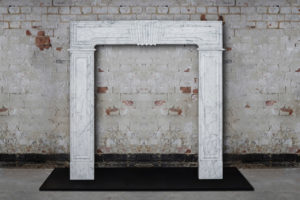 Queen Anne and early Georgian interiors favoured comparatively restrained decoration, with an emphasis on elegant proportions rather than excessive ornament. Carved wooden surrounds, marble chimney-pieces and classical details could be found across fashionable interiors.
This period also saw the fireplace becoming more closely related to the furniture and decoration of the room around it.
Rather than standing apart as a massive architectural structure, the fireplace increasingly became part of a carefully composed interior.
The Georgian fireplace: elegance through proportion
The Georgian period is perhaps the defining era for the British fireplace.
Influenced by Palladianism and the renewed interest in the architecture of ancient Greece and Rome, Georgian designers favoured symmetry, balance and classical detail.
Marble became particularly important, with fireplaces incorporating carefully selected slabs, moulded panels, fluted columns and delicate carving. White marble could create a light, restrained appearance, while coloured and veined marbles introduced a richer decorative quality.
The finest Georgian fireplaces demonstrate an important principle that remains relevant today: good design does not necessarily need to be elaborate.
A beautifully proportioned fireplace with restrained decoration can have considerably more presence than a heavily ornamented surround.
This is one reason original Georgian fireplaces continue to work so successfully in contemporary interiors.
Regency: classical design becomes lighter
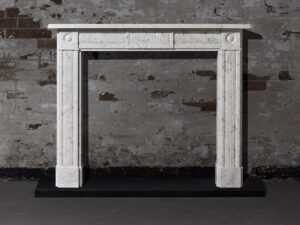
The Regency period brought a more decorative and sophisticated interpretation of classicism.
While the fundamental principles of symmetry and proportion remained, designers introduced stronger influences from French Empire design, ancient Greece and Rome, and archaeological discoveries of the period.
Regency fireplaces can therefore display a distinctive combination of restraint and ornament. Ebonised wood, brass details, marble and carved decoration were used to create interiors that felt elegant without necessarily being austere.
For today’s interiors, Regency fireplaces can offer a particularly versatile bridge between traditional architecture and more contemporary decoration.
Victorian fireplaces: ornament, invention and variety
The Victorian period saw enormous changes in British society, technology and design, and the fireplace was no exception.
Where Georgian interiors often relied upon classical restraint, Victorian designers embraced a much broader range of historical references.
Gothic Revival, Renaissance Revival, Elizabethan and classical influences all appeared in fireplace design. Carved marble and timber surrounds could be highly elaborate, while cast iron became increasingly important.
The cast-iron fireplace and insert became a defining feature of many Victorian homes.
Mass production allowed decorative ironwork to be produced at scale, while tiled inserts introduced colour and pattern into domestic interiors. A Victorian fireplace could therefore combine several materials and decorative influences within a single composition.
This variety is one of the reasons Victorian fireplaces remain so collectible today.
The cast-iron insert
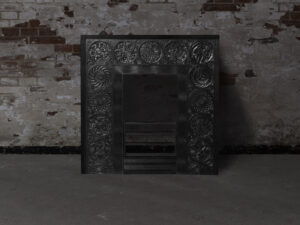 The development of the cast-iron fireplace insert deserves particular attention.
Unlike a simple open fireplace, the insert incorporated the fire grate and decorative surround into a more integrated design. Many examples feature intricate ironwork, floral motifs, classical decoration or Gothic detailing.
They were not merely functional objects. They were designed to be seen.
In Victorian and later homes, a fireplace might sit beneath a marble, stone or wooden mantel, with a decorative cast-iron insert forming the centrepiece.
For restoration projects, preserving the relationship between the insert and its surrounding chimney-piece can be just as important as the condition of either element individually.
Edwardian restraint and the Arts & Crafts movement
By the end of the 19th century, tastes were beginning to change again. 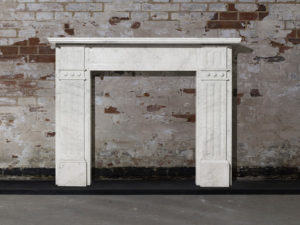
The highly decorative interiors of the Victorian period gave way to simpler forms influenced by the Arts & Crafts movement and a renewed appreciation for traditional craftsmanship.
Fireplaces became less concerned with displaying elaborate ornament and more concerned with honest materials and carefully considered construction.
Oak, stone, brick and simply detailed tiles became popular, while the fireplace continued to act as the visual anchor of the room.
The fireplace in the modern home
The role of the fireplace changed dramatically during the 20th century as central heating and other technologies reduced our dependence on an open fire.
Yet the fireplace did not disappear.
Instead, it became increasingly valued as an architectural and decorative feature.
This helps explain the enduring appeal of antique fireplaces today. An original Georgian marble chimney-piece or Victorian cast-iron insert can give a newly renovated room something that contemporary reproduction often struggles to provide: a sense of age and authenticity.
The marks of time, subtle variations in material and evidence of craftsmanship all contribute to its character.
Choosing history over imitation
For owners of period properties, an antique fireplace can also help restore a sense of architectural continuity.
The right fireplace doesn’t necessarily need to look pristine. In many cases, its age is part of its appeal.
A small variation in the colour of marble, softened carving, old repairs or a naturally developed patina can tell part of the object’s story.
This is why sympathetic restoration is so important. The objective isn’t always to make an antique fireplace appear new; it is often to preserve its character while ensuring it can function appropriately within its new setting.
A fireplace for every period
From the monumental inglenooks of Tudor houses to the refined marble chimney-pieces of the Georgian period and the richly decorated cast-iron fireplaces of Victorian Britain, the history of the fireplace mirrors the history of British interior design itself.
Each period brought its own ideas about proportion, decoration, materials and craftsmanship.
That history is still visible in the fireplaces that survive today.
For anyone restoring a period property—or simply looking to introduce a sense of history into a contemporary interior—an antique fireplace offers an opportunity to bring one of those surviving pieces of architectural history into the room.
And perhaps that is why the fireplace remains so compelling. Long after we stopped needing it solely for warmth, it continued to give a room something equally important: a sense of place.