
Georgian, Regency or Victorian? Understanding Fireplace Styles by Period
A fireplace can tell you a great deal about the age and character of a room. From the restrained elegance of a Georgian chimneypiece to the greater ornament of a Victorian surround, the proportions, materials and decorative details of a fireplace often reflect the architecture and design of its period.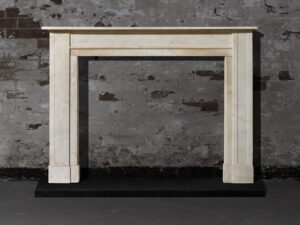
For anyone restoring a period property, or simply looking to introduce an authentic architectural feature, understanding these differences can be useful when choosing an antique or reproduction fireplace.
Georgian Fireplaces
Georgian fireplaces are known for their balance, symmetry and classical restraint. The period saw a strong influence from classical architecture, with fireplaces designed as an integral part of the proportions of the room.
Typical details include simple mouldings, fluted jambs, panelled friezes and small decorative corner blocks or paterae. Marble was widely used, particularly in more formal rooms, while slate and stone were also common.
The finest Georgian fireplaces tend to be elegant rather than elaborate. Their appeal lies in proportion and detail, making them particularly well suited to traditional townhouses and other interiors where architectural restraint is important.
Regency Fireplaces
Regency design developed from the classical language of the Georgian period but introduced a lighter and often more decorative character. Interiors became increasingly influenced by French design and ancient Greek and Roman motifs, while the fireplace remained an important architectural feature.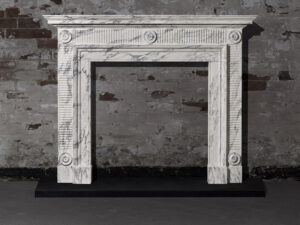
Regency surrounds can feature reeded or fluted columns, delicate carving, classical ornament and more pronounced decorative details. Marble was particularly well suited to the period, with contrasting colours and veining used to add richness without overwhelming the room.
A Regency fireplace can offer a balance between the formality of Georgian design and the more decorative approach that followed, making these pieces equally at home in traditional and more contemporary interiors.
Victorian Fireplaces
Victorian fireplace design is considerably more varied. As the 19th century progressed, designers looked to a wide range of historical influences, including Gothic, Renaissance, Elizabethan and classical styles.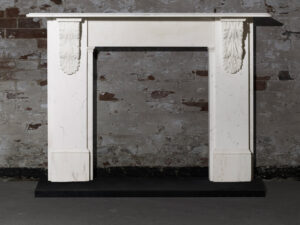
Marble surrounds could be heavily carved and richly veined, while cast iron became increasingly important. Decorative inserts, patterned tiles and intricate ironwork became familiar features of the Victorian fireplace, reflecting both changing tastes and advances in manufacturing.
This variety means that “Victorian” can describe a surprisingly broad range of fireplaces. An early Victorian surround may still retain much of the classical character of the Regency period, while later examples can be considerably more elaborate.
Looking at the Details
When identifying a fireplace by period, it is worth looking beyond the overall style. The shape of the opening, proportions of the surround, carving, mouldings, material and fireplace insert can all provide useful clues.
The relationship between the surround and the room is equally important. A fireplace that is correct in isolation may still feel wrong if its scale or proportions are unsuitable for the architecture around it.
For this reason, an original fireplace should be considered not only for its decorative appeal but also for its dimensions and relationship to the room in which it will be installed.
Antique or Reproduction?
An original period fireplace brings with it the character and craftsmanship of its age, as well as the natural variations and signs of use that make each piece individual. For restoration projects, an appropriate antique fireplace can help retain the architectural character of an older property.
Where an original piece cannot be found in the required size or configuration, a carefully made reproduction can provide an alternative. Bespoke reproduction fireplaces can be created using traditional techniques, drawing on original examples to reproduce appropriate period proportions and detail.
Choosing a Fireplace for Your Interior
Whether Georgian, Regency or Victorian, the right fireplace should feel naturally connected to the room. Period, proportion, material and detail all play a part, but there is no single formula for choosing a successful chimneypiece.
For a period property, matching the architectural language of the building can help create a convincing result. In a contemporary interior, an antique fireplace can instead provide contrast, introducing texture, history and a sense of permanence.
At Renaissance London, we specialise in antique Georgian, Regency and Victorian fireplaces, alongside bespoke and reproduction designs in marble, stone and cast iron. Our collection changes regularly, with restoration and fitting services also available for individual projects.
Finding the Right Period Fireplace
Understanding the differences between Georgian, Regency and Victorian design is a useful starting point, but the most important consideration is always the individual fireplace and the room it is intended for. Proportion, craftsmanship and authentic period detail are what ultimately give a chimneypiece its presence.