
How to Choose the Right Antique Fireplace for a Period Property
An antique fireplace can do far more than provide a focal point for a room. In a period property, the right chimney-piece can reinforce the architecture, restore a sense of history and give an interior a feeling of permanence that is difficult to achieve with a modern reproduction.
But choosing an antique fireplace is about more than finding one that looks beautiful. Proportion, period, material, detailing and condition all need to be considered — as does the relationship between the fireplace and the room around it.
At Renaissance London, the collection encompasses original Georgian, Victorian, Edwardian, French, Italian as well as earlier fireplaces in marble and stone, alongside cast-iron inserts, bespoke pieces and carefully made reproductions. Here are some of the key things to consider when choosing one for your home.
Start with the period of the property
One of the best places to begin is with the architecture of the room itself.
A Georgian house may call for the elegance and restraint of a Georgian marble or stone chimney-piece, while a Victorian interior can accommodate more elaborate carving, stronger proportions and decorative cast-iron inserts. Earlier properties may lend themselves particularly well to Queen Anne or early Georgian designs.
This doesn’t mean that a fireplace has to be exactly contemporary with the building. In fact, combining periods can be extremely effective in an interior. The important thing is that the proportions and character of the fireplace feel convincing within the space.
For example, an original Georgian marble fireplace can bring a beautifully understated architectural quality to a contemporary room, while a more decorative Victorian fireplace can become a dramatic centrepiece against a restrained colour palette.
Look at proportion before decoration
It is easy to fall in love with a particular marble, carving or decorative detail, but proportion is often the most important consideration.
The width of the fireplace should relate naturally to the wall, while the height of the opening, shelf and surround needs to work with the ceiling height and architectural details of the room.
A fireplace that is too large can overwhelm a modest room. One that is too small can look lost against a substantial wall.
This is one reason antique fireplaces are particularly interesting: they were originally designed with a particular architectural context in mind, and their proportions often have a refinement that is difficult to reproduce by eye.
Before buying, measure the available wall carefully, including skirting boards, flooring, alcoves and any existing chimney breast. The opening dimensions are just as important as the overall dimensions of the surround.
Marble, stone or cast iron?
The material of a fireplace has a significant effect on the atmosphere of a room.
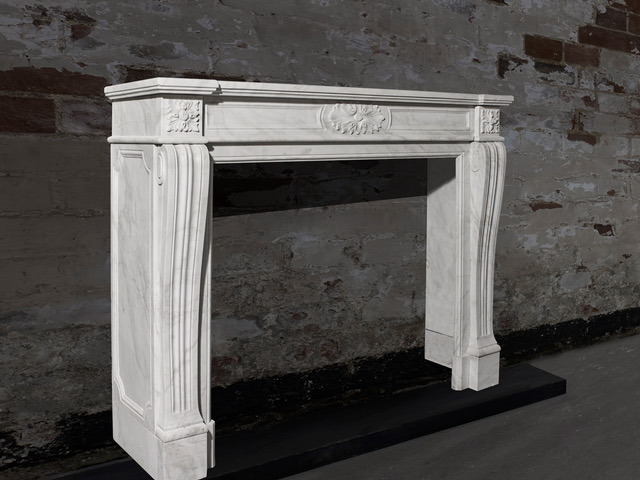
Marble offers elegance and variation. Georgian and Victorian marble fireplaces can range from almost completely restrained white Carrara pieces to richly veined and coloured marbles with more elaborate detailing.
Stone tends to have a more architectural and tactile quality. Bath stone, limestone and other natural stones work particularly well in country houses, period properties and interiors where a softer, less formal character is wanted.
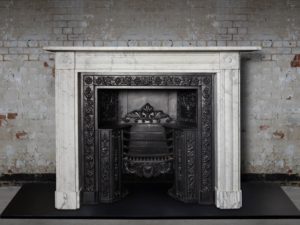
Cast iron brings a different character altogether. Period inserts and grates can introduce intricate detailing and a strong sense of Victorian or Georgian craftsmanship. They can also be paired with marble or stone surrounds to create a complete fireplace.
The choice ultimately depends on the architecture of the room and the atmosphere you want to create.
Pay attention to the details
With an antique fireplace, the smallest details can tell you a great deal.
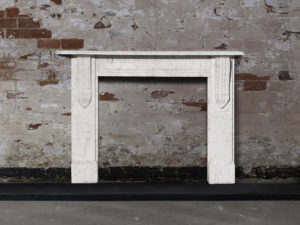
Look at the carving, corner blocks, jambs, frieze, shelf and the way individual pieces have been constructed. Features such as bullseyes on the top blocks, fluting, corbels and mouldings can help establish the period and character of a chimney-piece.
Natural wear is also part of the appeal.
An antique fireplace may have minor chips, marks or variations in colour that reflect its history. These imperfections can be part of what gives an original piece its authenticity and patina.
Restoration should therefore be approached carefully. The objective is not necessarily to make an old fireplace look brand new, but to preserve its character while ensuring that it is structurally sound and suitable for its new setting.
Original or reproduction?
There are occasions when an original/antique fireplace is the perfect choice, but it isn’t always possible to find an existing piece with the right dimensions.
A room may require an unusual size, a matching pair may be needed, or a listed property may require a fireplace that closely reflects an original fireplace or architectural feature.
This is where bespoke and reproduction work can be particularly useful.
A well-made reproduction can be based on an authentic period design, using traditional details and carefully considered proportions. For projects where an existing fireplace needs to be matched, specialist makers can also work from photographs, moulds and measurements.
The distinction is important: reproduction does not have to mean compromising on character or craftsmanship.
Consider the room as a whole
A fireplace should never be chosen in isolation.
Think about the flooring, skirting boards, doors, cornices, windows and furniture that surround it. A beautifully carved fireplace may look spectacular on its own, but feel out of place if every other element in the room is understated.
Equally, a simple Georgian fireplace can provide exactly the quiet architectural anchor that a highly decorated room needs.
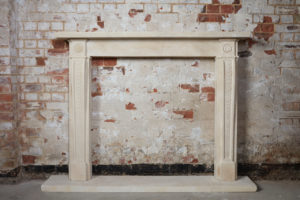
Colour is another consideration. White and pale marble can create a light, elegant effect, while darker or more strongly veined stone can make a fireplace feel much more substantial. Cast iron introduces a darker, graphic element that can work particularly well with painted walls and contemporary furniture.
The most successful interiors tend to be those where the fireplace feels as though it belongs in the room, rather than simply having been added to it.
Don’t overlook the fireplace insert
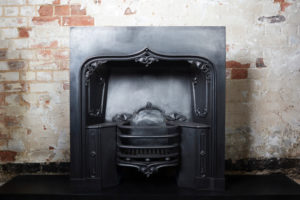
The surround is usually the first thing we notice, but the insert or grate can completely change the appearance of a fireplace.
A period cast-iron insert can provide an important historical detail, particularly in Victorian and Georgian interiors. Decorative grates and baskets can also add texture and visual depth even where the fireplace is primarily being used as an architectural feature.
When selecting a surround, it is worth considering the insert at the same time.
The two elements should feel proportionate and stylistically compatible.
Restoration is part of the process
Many antique fireplaces have lived several lives before arriving in their new home.
Some may need cleaning, structural work or careful repairs. Others may require missing elements to be reproduced or the entire chimney-piece to be reassembled.
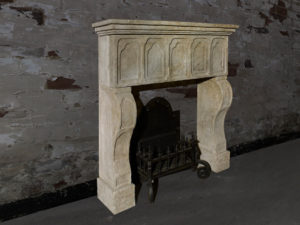 Specialist restoration is therefore an important part of buying an antique fireplace. Renaissance London’s restoration work focuses on retaining as much of the original material and history as possible, rather than removing every sign of age.
That approach matters. A fireplace’s patina, small marks and evidence of use are part of what makes an antique piece different from a newly manufactured one.
The right fireplace should feel inevitable
Perhaps the best test is surprisingly simple: once the fireplace is installed, does it feel as though it has always belonged there?
The ideal antique fireplace doesn’t simply decorate a period property. It strengthens the architecture around it.
Whether the choice is a restrained Georgian marble surround, a substantial stone chimney-piece, an ornate Victorian corbel fireplace or a carefully made reproduction, the key is to consider period, proportion, material and condition together.
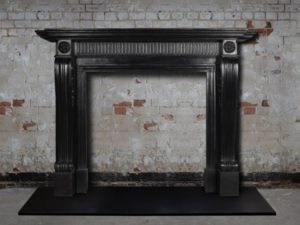
Take your time, measure carefully and look beyond the immediate visual impact. An antique fireplace is an architectural investment, and the right one can transform an entire room.
Renaissance London’s collection includes antique marble, stone and cast-iron fireplaces, as well as bespoke and reproduction pieces. The collection changes regularly, so if you cannot see the exact style or dimensions you are looking for, it is worth enquiring about current stock, restoration and bespoke options.