
A Rare Doulton Art Nouveau Fireplace: Rediscovering an Architectural Masterpiece
There are some pieces that stop us in our tracks. 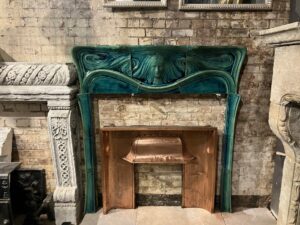
After decades of sourcing and restoring antique fireplaces from across Britain and Europe, it takes something truly exceptional to surprise us. This remarkable Doulton Art Nouveau ceramic fireplace is one of those rare discoveries.
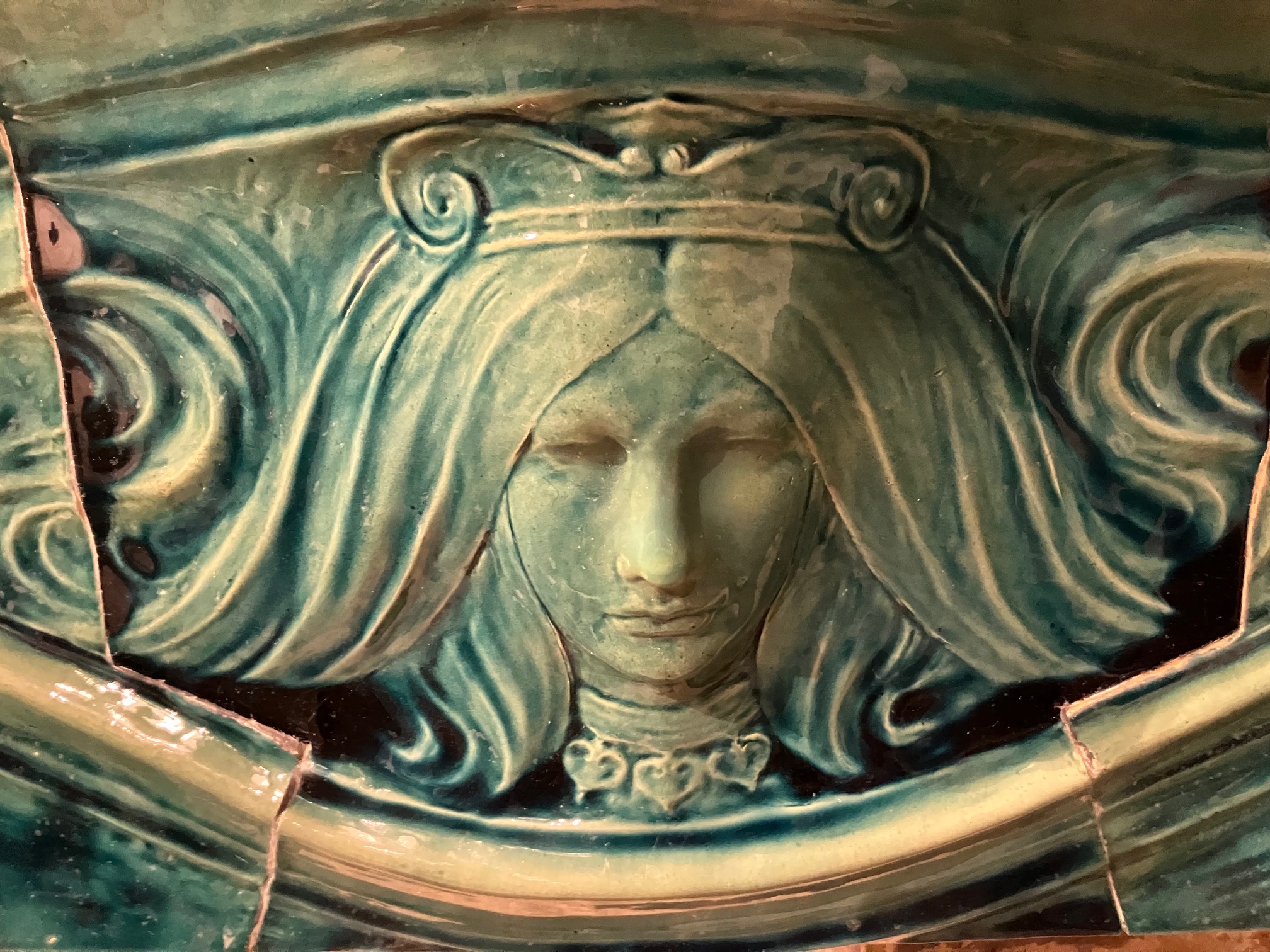
With its rich turquoise glaze, sculptural female figure and sweeping organic forms, it is far more than a fireplace—it is a work of art.
The Beauty of Art Nouveau
Dating from around the turn of the twentieth century, this striking ceramic surround perfectly captures the spirit of the Art Nouveau movement.
At its centre is a serene female figure whose flowing hair merges effortlessly into swirling waves that extend across the frieze. The sculptural composition creates a wonderful sense of movement, while the vivid turquoise and deep blue glazes enhance every curve and detail.
Rather than simply decorating the fireplace, the sculpted figure becomes part of its architecture, giving the piece an almost mythical presence.
Confirming the Maker
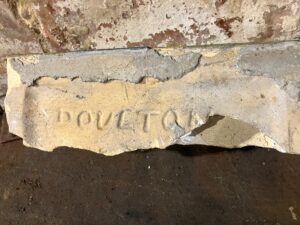
An impressed DOULTON mark on the reverse confirms the surround was produced by Doulton’s architectural ceramics department.
Today, Doulton is perhaps best known for its figurines and Lambeth stoneware, but around 1900 the company also produced some of Britain’s most ambitious architectural ceramics. Decorative fireplaces, tile panels and glazed architectural commissions formed an important part of their output, combining technical innovation with the artistic ideals of the Arts and Crafts and Art Nouveau movements.
Despite extensive research, we have yet to find another example of this exact fireplace in published catalogues or auction records. That only adds to its fascination and suggests it may be a relatively scarce design.
A Sculptural Centrepiece
What makes this fireplace so remarkable is its sense of movement.
The flowing lines, inspired by nature, are characteristic of Art Nouveau, yet the modelling possesses an unusual refinement. The female figure is beautifully proportioned, her expression calm and timeless, while the sweeping relief creates a striking interplay of light and shadow across the glazed surface.
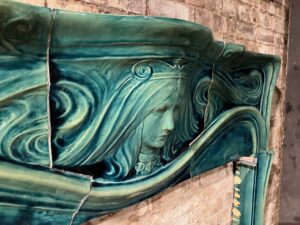
The rich turquoise glaze is equally impressive. Subtle variations of teal, cobalt and emerald bring depth and vitality to the design, ensuring the fireplace changes character as the light moves across its surface throughout the day.
It is easy to imagine this as the focal point of an elegant Edwardian drawing room, where art and architecture were intended to exist in perfect harmony.
Why Architectural Ceramics Matter
Architectural ceramics occupy a fascinating place in British decorative art.
Unlike vases or decorative objects, fireplaces were designed as permanent architectural features. Many were removed during twentieth-century renovations, while others were lost altogether, making complete surviving examples increasingly uncommon.
Today, original ceramic fireplaces are appreciated not only by collectors but also by architects and interior designers seeking authentic period features that combine artistic quality with practical function.
Preserving Decorative Heritage
Every antique fireplace tells a story.
Some reflect the restrained elegance of the Georgian period; others embody the grandeur of the Victorian era. Pieces like this Doulton surround represent something different—a moment when sculpture, architecture and craftsmanship came together to create an object that is both functional and deeply expressive.
Although the exact pattern has yet to be identified, this fireplace stands out as one of the most sculptural and visually striking ceramic surrounds we have encountered.
It serves as a reminder that remarkable examples of British craftsmanship are still waiting to be rediscovered.
At Renaissance London, it is a privilege to preserve these extraordinary pieces and help them find new homes, where they can continue to be admired for generations to come.